
A number becomes knowledge through its relationships.
Sales can rise while margin falls. A busier branch can consume more cash.
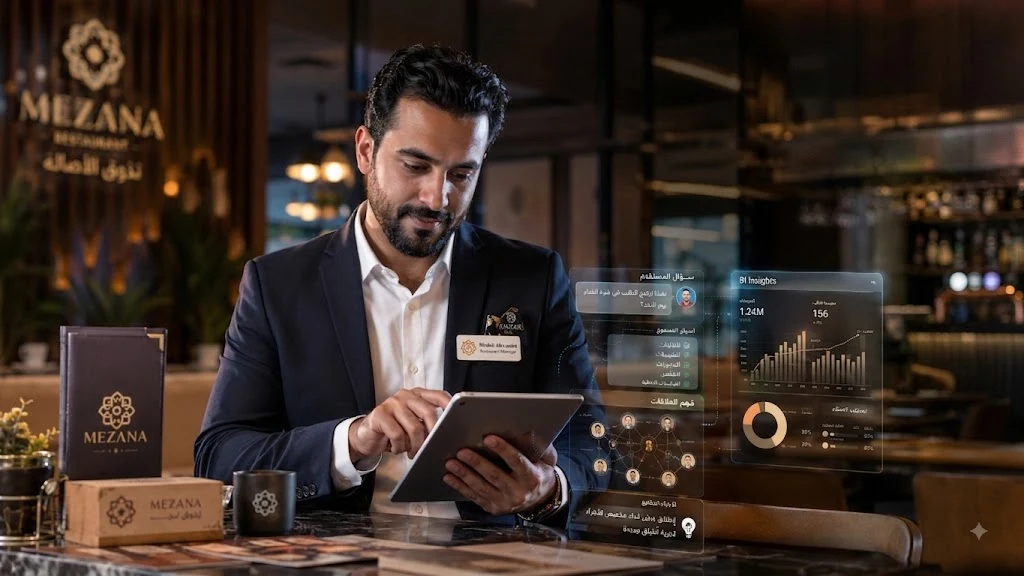
What happens, and what does it mean?
The first number reports movement. The second begins to explain it.
How does the capability work inside operations?
FoodTech BI connects sales, cost, branch, customer, and time so the relationship behind the result becomes visible.
FoodTech BI
What it adds
Measures by branch, product, channel, and period
Trend and comparison views
Inventory, purchasing, customer, and sales analysis where data is available
Operational dimensions kept with the measure
How it appears in operations
How does this appear in daily work?
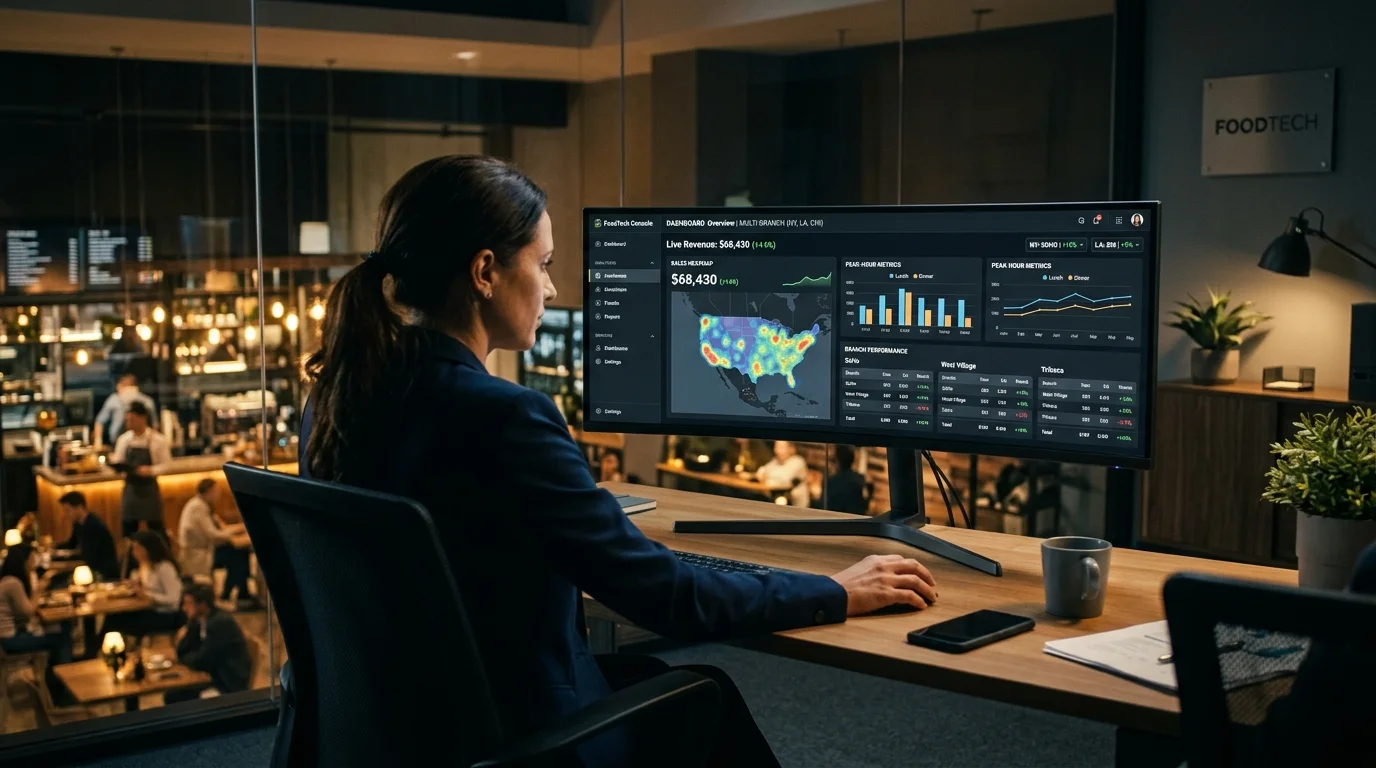
Compare branches
Read waste by period
Follow a product across channels
Available in
Compatible plans
- FoodTech Free insights
- Growth Flex
- Pro Branch
- Scale
- Enterprise
Connects with
Products it connects with
- FoodTech Brain
- FoodTech POS
- Inventory
- FoodTech CRM
FAQ
What you need to know
Can FoodTech BI run on its own?
FoodTech BI has a clear role on its own, while its value expands when connected to the relevant FoodTech products under the selected plan and integrations.
Is every capability immediately available?
Availability depends on product state, plan, market, and enabled integrations. We label the current state and never present work in progress as generally available.
How do we begin?
We map the real operating flow first, then agree the starting point, configuration, integrations, and rollout scope.
Does the operation need a permanent internet connection to keep moving?
Connectivity should add capability, not become the operation’s power switch. Where Offline mode is supported, core work continues locally, events are retained, and synchronization resumes when connectivity returns. Operations that require live verification, including some payment or sensitive actions, remain Online by design. Offline scope varies by product, device, and activation; the goal is to keep work moving even when the network does not.
What if the internet is available — but slower than the operation?
FoodTech does not assume a perfect network. Where supported, every action does not wait for a full server round trip: local state, asynchronous (Async) synchronization, and safe retries keep work moving without duplicating operations. The team can continue what is safe to continue while the system catches up with the network; payments and other sensitive actions still require explicit verification when needed.
Before you start
Which relationship explains today’s result?
Start with sales and margin, then trace cost, branch, and time.
FoodTech BI
See how this product takes shape inside your operation.
Sales can rise while margin falls. A busier branch can consume more cash.